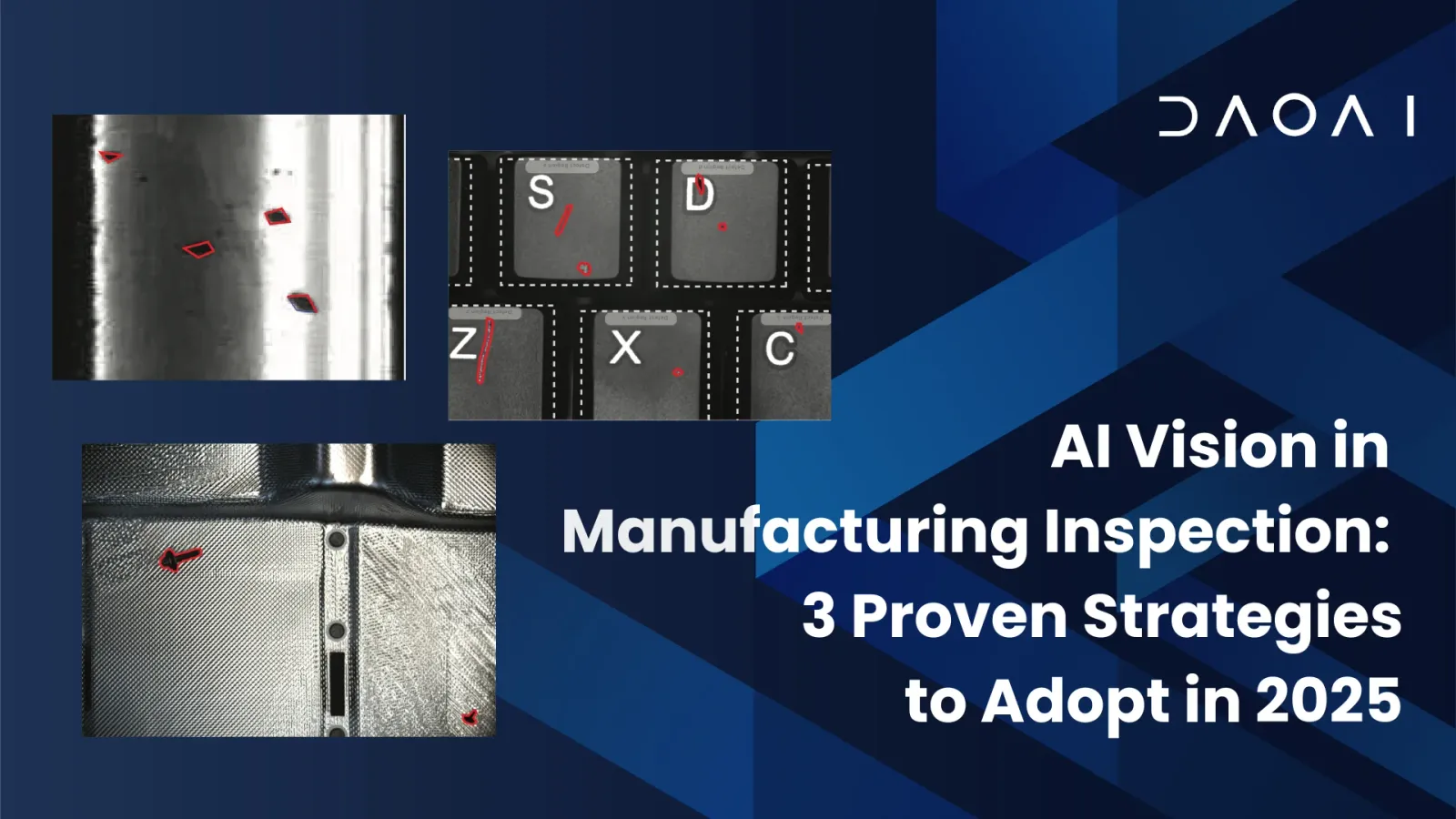
Al Vision in Manufacturing Inspection: 3 Proven Strategies to Adopt in 2025
In the past year, manufacturers have eagerly embraced vision AI in their production lines—whether in industrial ...
April 09, 2025
Traditional sand and gravel particle size detection relies on manual screening or mechanical measurement, which creates ...
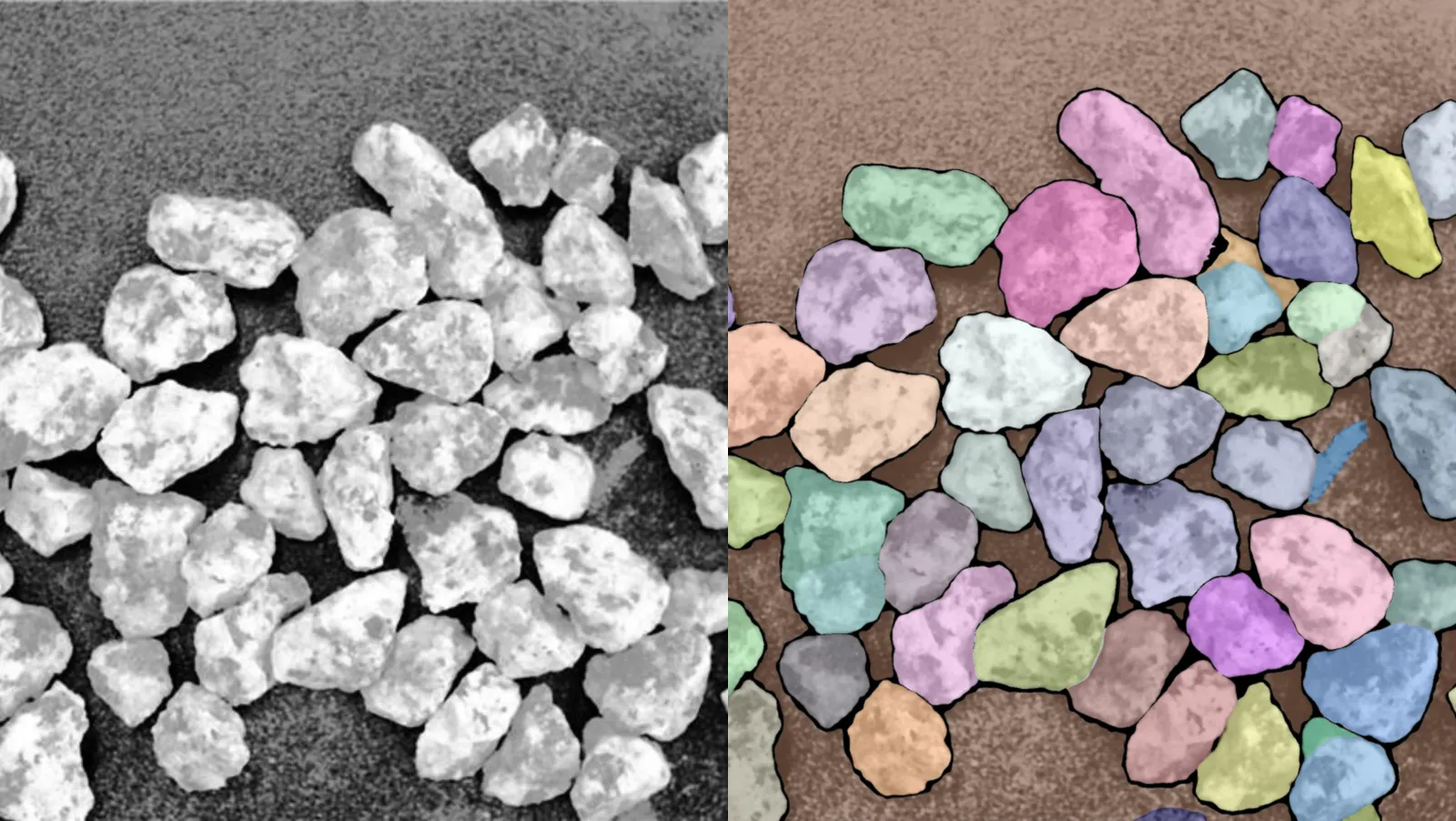
Traditional sand and gravel particle size detection relies on manual screening or mechanical measurement, which creates problems such as low efficiency and large subjective error. Through high-precision imaging + intelligent algorithm analysis, Vision AI technology can achieve:
DW Customized Solutions
We are committed to accurately solving customers' practical problems; From code optimization to hardware upgrades, we provide a wide range of solutions.
Step-by-step Tutorial
With this tutorial, you will become familiar with all the steps required to complete sand and gravel inspection using the DaoAI World SDK.
Step1: Activate DaoAI World SDK license
Before you start, please make sure that you have purchased the DaoAI World SDK license (if you have not purchased it or have problems with activation, please contact our technical staff for online support).
Step2: Deploy a local SDK
For a detailed deployment solution, please refer to our official DaoAI World documentation to complete the deployment of the local SDK.
Step3: Image preprocessing (Pre-Processing Stage)
This step optimizes image quality, highlights target features, reduces noise interference, and adapts to model input requirements.
Grayscale (focus on shape/texture, filter colour information)

Image scaling
Histogram Equalization (optional)
Filtering and Noise Reduction 
Automatically picks the best threshold to separate the target and background
Unsharp mask (optional)
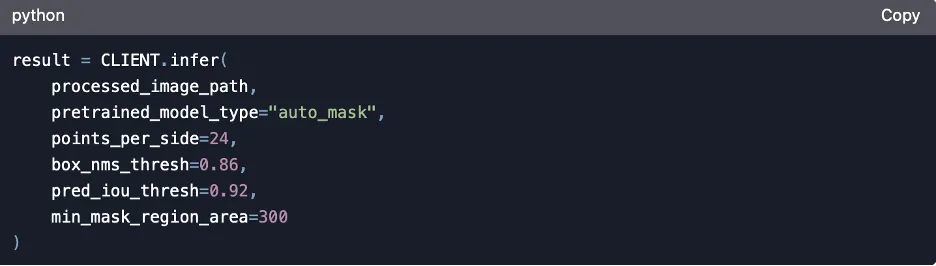
Step 4: Model Inference
Remote AI model will perform smart segmentation and obtain mask data.
Upload the preprocessed images to the server for inference through APIs.

Return the model inference results along with the parameters.
Extracting segmentation masks from model results, calculating physical dimensions, and generating reports)
The model results need to be Base64 decoded into binary and then reconstructed as a NumPy array.
Mask Data Analysis

Through RLE encoding, the binary mask is efficiently compressed, reducing data transmission.At the same time, based on a preset scale (1/41 mm per pixel), pixel dimensions are converted to actual physical size.
Step 6: Data Export and Visualization
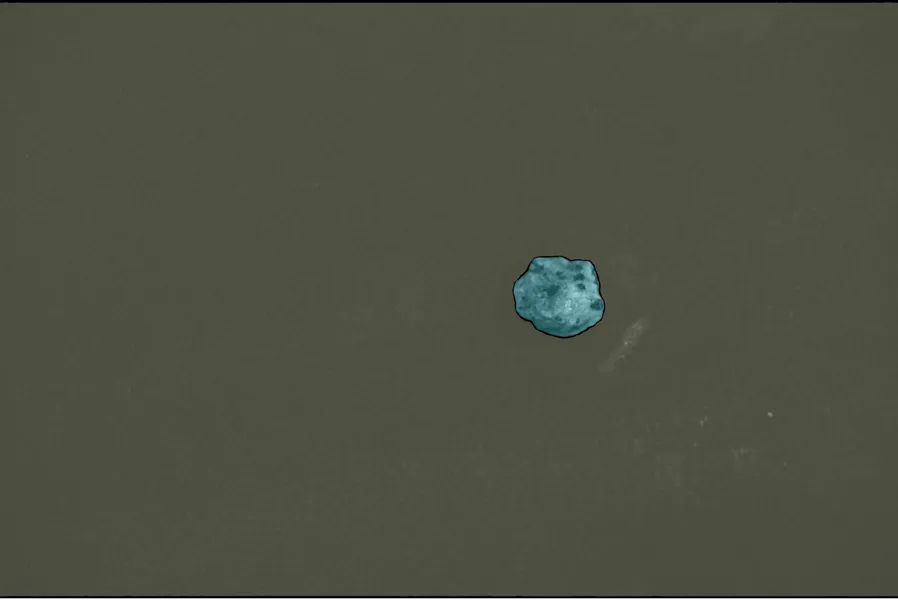
Generate an Excel file to record the area and diameter of each target, while also saving images, including segmentation masks overlaid on the original image, to visualize the detection results.

Pre-processed Images
Image of Separated Sample after Smart Segmentation
Through customized algorithms (preprocessing enhancement, model tuning, post-processing filtering), we have effectively solved the core problems such as non-coplanar error, surface irregularity, texture interference, etc., Ensured that the measurement error is controlled within ±0.1mm. However, the robustness of the algorithm is highly dependent on the input image quality
Camera with higher specifications (such as DaoAI), with hardware level optimization, thedetection limitation caused by the physical limitations of ordinary cameras can be further eliminated, and pixel-level precision image input can be provided for industrial inspection, ensure that the potential of the algorithm is maximized.
Traditional methods, such as manual screening and mechanical measurement, often suffer from low efficiency and significant subjective errors. Vision AI offers a transformative approach by providing:
High-Speed Analysis: Inspection speeds of 10 milliseconds per region.
Enhanced Accuracy: Particle size measurement errors reduced to ≤0.1mm, meeting industrial micron standards.
Automated Processes: Seamless integration from imaging to analysis and report generation, enabling rapid traceability.
These advantages lead to improved product quality, reduced waste, and increased operational efficiency.
Several physical factors can impact image acquisition:US National Labor Exchange
Non-Coplanar Issues: Discrepancies between the ruler and stone surfaces can introduce measurement errors.
Uneven Surfaces: Irregular stone surfaces can cause inconsistent lighting, affecting image clarity.
Variable Shooting Angles and Distances: Inconsistent camera positions can distort size and shape representations in images.
Addressing these challenges is crucial for accurate measurements.Automate
Vision AI employs advanced algorithms to tackle image processing issues:
Texture and Color Variations: Algorithms differentiate between actual particle boundaries and surface textures.
Particle Adhesion: Intelligent segmentation models can separate adhered particles during the training phase.
Lighting Conditions: Techniques like histogram equalization and bilateral filtering mitigate the effects of uneven lighting.DaoAI
These solutions enhance the reliability and accuracy of inspections.
DaoAI provides tailored algorithmic solutions:
Unsharp Masking: Reduces the impact of blurred edges on size calculations.
Grayscale Distribution Adjustment: Compensates for local shadows and overexposure.
Fixed Zoom Ratios: Prevents pixel scale fluctuations due to changes in shooting angles or distances.
Automated Segmentation: Separates adhered particles without the need for post-processing.
These algorithms ensure precise and consistent measurements.
DaoAI's hardware solutions complement its software capabilities:
Compatibility: Supports most 2D cameras available in the market.
Custom Cameras: Offers self-developed cameras optimized for specific inspection needs.
Stable Imaging: Ensures consistent image capture through fixed positions and angles.
This integrated approach facilitates efficient and accurate inspections.
Adopting Vision AI leads to:
Improved Quality Control: Accurate measurements ensure product consistency.
Operational Efficiency: Faster inspections reduce bottlenecks in the production process.
Cost Savings: Minimized errors and waste lead to reduced operational costs.
Scalability: The system can adapt to varying production scales and requirements.
From defect detection to quality control — discover what DaoAI can do for your production line.
In the past year, manufacturers have eagerly embraced vision AI in their production lines—whether in industrial ...
April 09, 2025
In the modern chemical industry, crystal inspection has a crucial impact on the quality and performance of products. ...
April 09, 2025
Using AOI (Automated Optical Inspection) to check wafer surface condition and detect metallic residue or scratches is ...
August 26, 2025
AI inspection insights, product news, and industry analysis. Once a month, no noise.